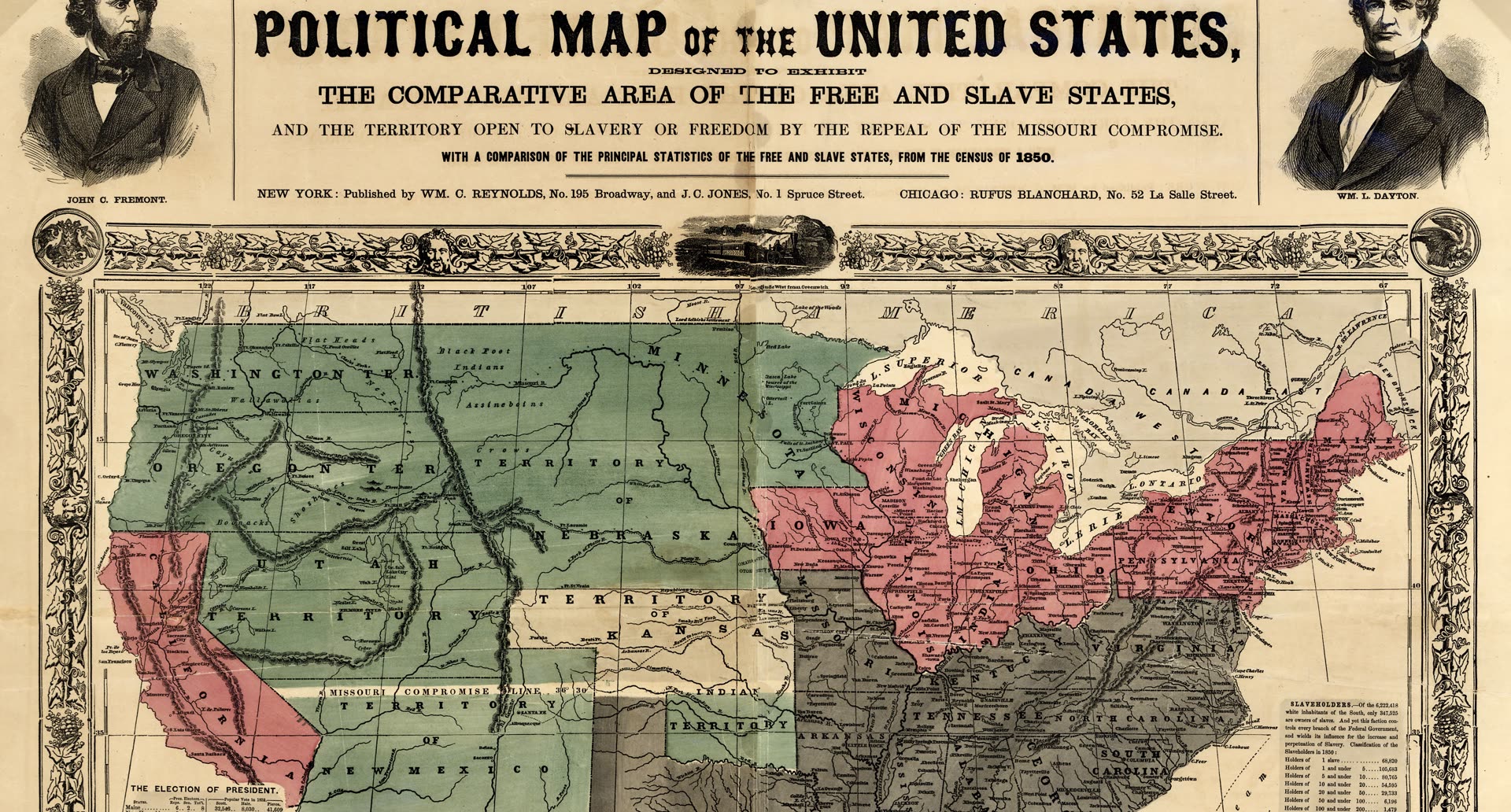
The fifty years between 1850 and 1900 were not merely a half-century of American history. They were a crucible. A nation cracked open by slavery, stitched back together by war, and then thrust, not always willingly, into an industrial age that would reshape every corner of life. These pages explore that transformation: the famous and the forgotten, the celebrated and the contested.
They tried to invade Canada. They tried to rise in Dublin. They tried to blow up London. Every armed attempt to free Ireland from across the Atlantic collapsed. And yet, by the time the last Fenian was buried, Irish-American activism had built something no rising ever could.
In July 1893, a young Wisconsin professor read a paper to a nearly empty room announcing that the American frontier was dead. A few hundred yards away, Buffalo Bill was drawing twenty thousand people a session performing it. Both were right — and the country has been arguing with the implications ever since.
history, frontier thesis, frederick jackson turner, 1890 census, wounded knee, american west, gilded age, buffalo bill, safety valve theory
On the afternoon of July 12, 1893, a thirty-one-year-old history professor from Wisconsin named Frederick Jackson Turner stood in a hot lecture hall at the World's Columbian Exposition in Chicago and read a paper called "The Significance of the Frontier in American History." Attendance was thin.
history, Thomas Edison, phonograph, history of technology, sound recording, 19th century invention, Menlo Park, tinfoil phonograph, Alexander Graham Bell
Thomas Edison wasn't trying to invent sound recording... he was trying to speed up the telegraph. What he built instead, almost by accident, was the first machine in history that could hold on to a human voice, though it would take him another decade to make one anyone could actually use.
history, Transcontinental Railroad, U.S. History, Westward Expansion, Chinese Railroad Workers, 19th Century America, Central Pacific Railroad, Union Pacific Railroad, Gilded Age
On May 10, 1869, a telegraph operator at Promontory Summit, Utah, tapped out a single word: "Done." Cities heard it within minutes. San Francisco fired a hundred-gun salute, and Chicago ran a parade seven miles long, with church bells ringing out from Philadelphia to New York. Six years earlier, crossing the country meant six months by wagon train, a sea voyage around Cape Horn, or a shorter but still miserable crossing through the jungle at Panama. Now it took about a week.
history, buffalo near-extinction, Plains tribes, American bison, Native American history, buffalo slaughter, bison restoration
For thousands of years, the buffalo, more accurately called the American bison, stood at the center of life on the Great Plains. For many Plains tribes, it was not simply an animal to be hunted. Buffalo provided food, clothing, shelter, tools, trade goods, and a place in ceremony and story. Their movements shaped seasonal life. Their abundance made it possible for communities to live across a hard, open country.
The phrase "splendid little war" comes from a letter John Hay wrote to Theodore Roosevelt in July 1898, while the fighting was still going on. Hay was U.S. ambassador to Britain at the time. He would soon be Secretary of State. The phrase stuck because Americans wanted it to stick.
history, Dodge City, Old West, cowtowns, Kansas history, cattle drives, Western Trail, Fort Dodge, Wyatt Earp, Bat Masterson, Boot Hill, buffalo hunters, frontier towns
At the end of the Civil War, the American frontier did not suddenly become peaceful. The fighting between North and South had ended, but the movement west continued, and with it came a new set of conflicts. Wagon trains still crossed the plains. The Santa Fe Trail still carried freight, mail, soldiers, and settlers. The U.S. Army still needed supply points and defensive posts as it fought the Plains tribes and tried to keep traffic moving across the region. That was the setting for Fort Dodge.